
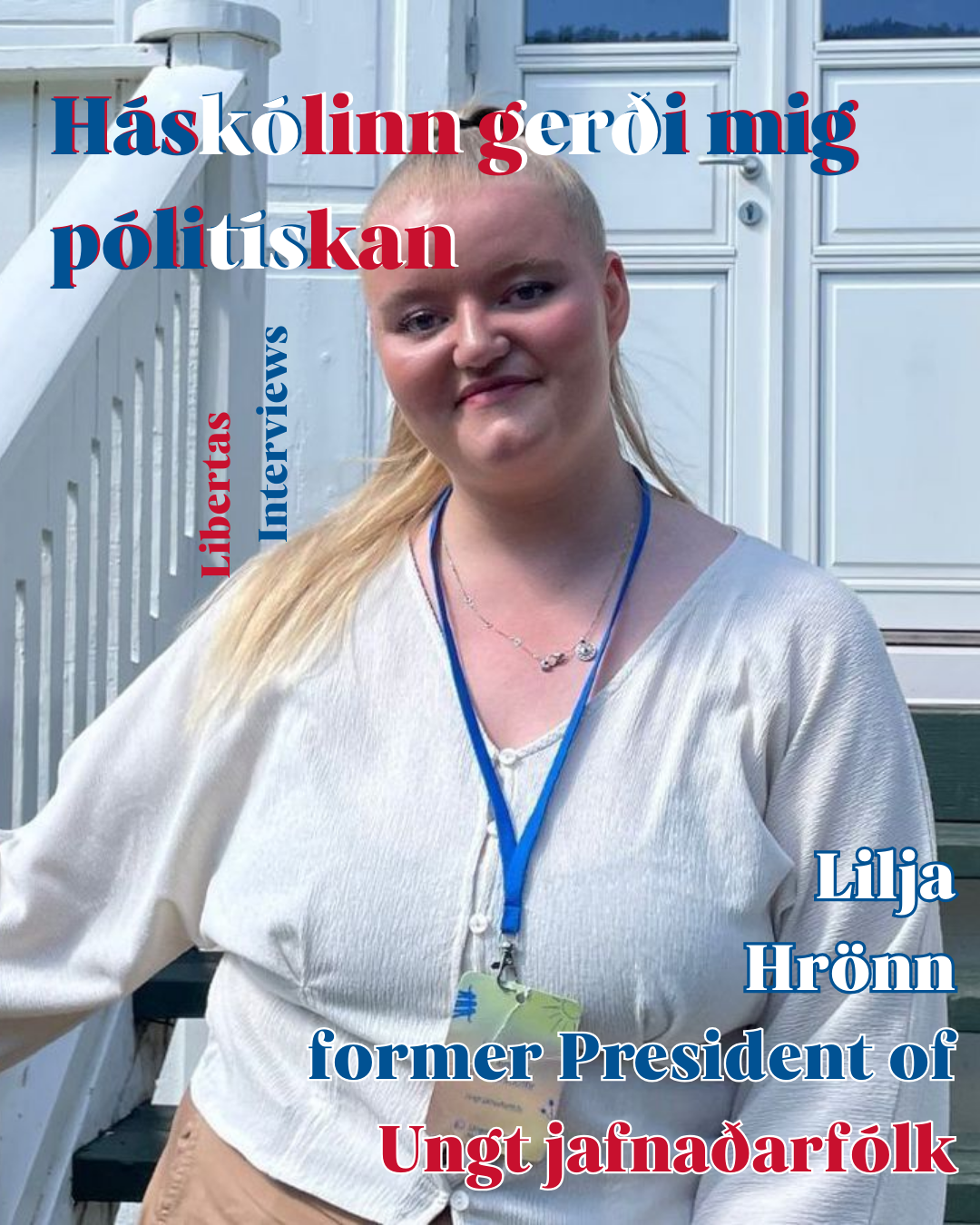
Former chair (forseti) of Ungt jafnaðarfólk, Lilja Hrönn, is a 25-year-old law student at the University of Iceland in Reykjavík. Until spring 2025 she served as chair of the Icelandic Social Democratic youth organization - Ungt jafnaðarfólk - and has a background in the student organization Röskva. Today she serves as an international officer with a focus on the Nordic region.
It is evening at the Hanaholmen Swedish-Finnish Cultural Centre outside Helsinki. The conference day has slipped into that quiet in-between space when participants linger in the corridors, speaking softly and trying to extend their conversations before returning to everyday life. I have the pleasure of seeing my Icelandic friend Lilja again after our election adventures during my visit to Iceland in 2021. Now we both find ourselves in Finland at the same conference on youth engagement in Europe. In a meeting room overlooking the water, we sit down to talk about Icelandic social democracy, youth politics, and a movement that paradoxically is older than its own party.
Text: Erik Solfors
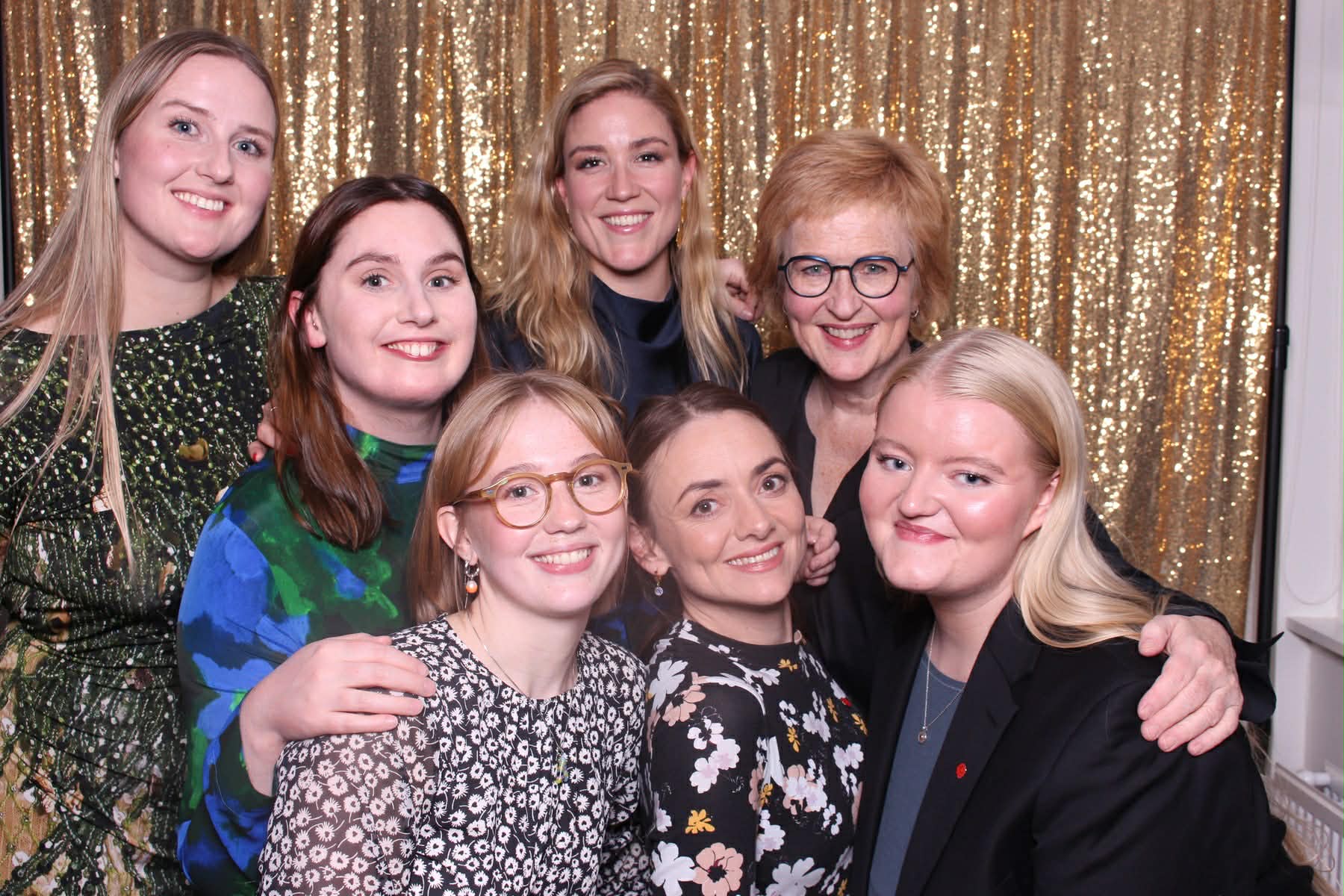
Part I
Ungt jafnaðarfólk and Samfylkingin - jafnaðarflokkur Íslands
What is Ungt jafnaðarfólk?
Lilja Hrönn laughs as she begins to explain the name.
– “We actually changed the name to Ungt Jafnaðarfólk. It used to be Jafnaðarmenn — menn means men and fólk means people — so we wanted to make it more inclusive.”
Ungt Jafnaðarfólk is the Icelandic Social Democratic youth organization. Membership spans ages 15 to 35.
– “The day you turn 36, you’re out.”
On the other hand, you cannot join before turning 15.
– “You legally can’t join a political party before you’re 15. And culturally it’s a bit taboo to involve children in politics. We don’t talk politics with children in Iceland.”
This is a clear contrast to the rest of the Nordic region, where political engagement often begins earlier.
But the most remarkable feature is the organization’s age.
– “A fun fact is that we were formed before the party. We’re two months older.”
The youth organization was founded in March 2000. The party in May of the same year. Icelandic social democracy was born from a merger of several movements — but the youth got there first.
Only a few years ago it was not obvious to call yourself a social democrat in Iceland. Now the situation is different — what changed?
– “Now it’s popular. A few years ago, not at all. But we’ve been polling very well and you can feel it among young social democrats — people want to join. People want to be part of the winning team.”
New members are streaming in. Some come from other parties; others have never previously participated in politics.
– “It’s very fun to be a social democrat right now.”
When she describes the movement’s biggest political issues, the conversation quickly turns to Europe.
– “Right now our biggest issue — both for the movement and for Iceland — is the EU.”
The party has long been pro-European, but her generation lacks living memory of the last major EU debate.
– “I’m 25 and I was eight or nine when we last had a big debate about the EU and the referendum.”
The Social Democratic coalition government has promised a new referendum before 2027.
– “That’s huge.”
At the same time, migration remains a constant and more divisive issue.
– “It’s something we discuss a lot. We have different opinions within the party. It’s healthy not to have just one opinion, but it can get a bit heated.”
How are U.J and the party structured, and how much influence do you have?
Ungt Jafnaðarfólk is one of three national movements within the party: youth, women, and 60+. The structure is national rather than local.
– “It’s not like you just participate in Reykjavík. You participate in the national youth movement.”
An executive board of eight people handles day-to-day operations and meets every other week. In addition, there is a larger board that gathers monthly — about thirty people from across the country.
– “They’re big meetings.”
Influence within the party has grown significantly in recent years.
When the current party leader and prime minister, Kristrún Frostadóttir, was elected she was still within the youth age bracket.
– “That was an enormous win for us. Such a young leader whom many of us knew personally.”
After the most recent party congress, the youth movement holds half of the thirty seats on the party board, and four of six seats on the executive committee, which meets monthly.
– “And I’m one of the four on that second board. I get to see exactly how the party is governed.”
U.J is the youth organization in Iceland — how are students organized?
– “The youth movement is the youth movement. Universities have their own student movements.”
Only one university has organized student politics: the University of Iceland. There is a left-wing list there, Röskva, which does not formally belong to the youth organization but where many people move between both worlds.
– “I was chair there before I became youth chair.”
Student politics functions as a training ground. But the structures are kept separate.
What does a typical U.J membership meeting look like?
Membership meetings are held in the evenings. Two hours at a time. Politics and practice are mixed.
– “We talk about immigration, the EU, taxes — but also daily organizational work.”
The new youth chair invites members of parliament to explain what is happening in parliament. That creates a direct connection between the movement and power.
At the same time, the meetings are deliberately low-threshold.
– “You don’t need prior knowledge. You just need interest. We try to make politics less boring.”
And, she adds with a laugh:
– “At many meetings we have beer. I know Sweden doesn’t do that. But it’s often just good conversations in a relaxed environment.”
Regardless of the country in the Nordic region, politics doesn’t begin in the plenary hall. It begins around a table - and quite often with a beer in hand.
Part II
Icelands political system, EU and the railroad issue
Darkness has fallen outside Hanaholmen as the conversation drifts from youth politics to Iceland’s political system. For many Nordics, the country is politically hard to place: small, isolated, yet deeply integrated into European structures.
Lilja Hrönn begins with history.
– “We have the world’s oldest parliament, Alþingi. It was founded around the year 930 — I might be a little off, but it’s very old.”
It is an institution older than the modern state itself. Today parliament consists of 63 members, and the constitution still bears traces of Danish influence from the independence period.
– “We haven’t changed it very much.”
The past year marks a political shift.
– “Tomorrow it’s one year since the election where we had a big win.”
Iceland now has six parties in parliament. Three govern, three are in opposition. On the classic left–right scale, her party is the only clearly left-wing party in government.
Alþingis (parliaments) political partys
Left-Green Movement (Vinstri græn)
An eco-socialist left-wing party combining environmental politics with classical left ideology. Historically strong on welfare issues and anti-militarism. Has served in government but lost its parliamentary representation after coalition compromises.
Social Democratic Alliance (Samfylkingin)
Iceland’s social democratic party. Pro-European, welfare-oriented, and urban. Has undergone a strong recovery under new leadership and presents itself as reformist and future-focused.
Pirate Party (Píratar)
A digital, libertarian left-liberal party focused on democracy, transparency, and civil rights. Anti-establishment and system-critical. Has attracted young voters and often acts as an opposition voice. Previously an opposition partner with Samfylkingin.
People’s Party (Flokkur fólksins)
A social populist party focused on pensioners, low-income groups, and social security. Ideologically hard to place but economically left-leaning and culturally pragmatic. Captures protest voters.
Progressive Party (Framsókn)
An agrarian centrist party with rural roots. Pragmatic, populist, and coalition-oriented. Often functions as a pivotal middle party and regularly participates in governments regardless of bloc alignment.
Independence Party (Sjálfstæðisflokkurinn)
Iceland’s major conservative right-wing party. Market-liberal, business-friendly, and traditionally state-bearing. Comparable to a mix of Nordic conservatism and classical liberal conservatism. Has dominated Icelandic politics for decades.
Liberal Reform Party (Viðreisn)
A pro-European liberal centre-right party. Focused on market reforms, EU integration, and institutional modernization. Urban voter base with a strong emphasis on economic reform.
Centre Party (Miðflokkurinn)
A national-conservative and populist party founded by former prime minister Sigmundur Davíð Gunnlaugsson. EU-critical, immigration-skeptical, and anti-establishment. Comparable to Nordic right-wing populist parties.
– “We are the only officially left-wing party in parliament right now if you look at it ideologically.”
The coalition consists of the Social Democrats, the liberal pro-European party Viðreisn, and the People’s Party. The combination was unexpected — but more stable than previous governments.
– “It has worked better than expected.”
The previous government was marked by ideological contradictions that paralyzed politics. For seven years, much stood still. The leading government party was Vinstri Græn, which governed together with the Independence Party and the Progressive Party (Framsókn), leading to a total collapse for Vinstri Græn in the 2024 election.
– “Politics in Iceland had been in a deadlock for seven years. Now it feels functional again.”
A decisive moment came during the summer’s major debate over the fishing tax, an issue that always cuts straight into Icelandic economics and identity.
– “Politically we won that debate while the opposition lost support.”
It was a test of the government’s cohesion — and it held.
Just a few years ago the party was on the margins. When I visited Iceland in 2021, support hovered around 6–8 percent. Today they are above 20 and approaching 30. What happened?
According to Lilja Hrönn, the explanation is personified.
– “A lot is about our leader, Kristrún.”
When Kristrún Frostadóttir took over in 2022, she changed not only the party’s message but the very form of politics.
– “Politics had become separated from ordinary people. If you weren’t an active member, you never met politicians.”
She began traveling across the country. Not for mass rallies, but for conversations.
– “No speeches. No presentations. She sat in circles in bakeries and cafés and asked: how can we make things better for you?”
Over a year and a half, around 150–200 meetings were held. At the same time, expert groups were created around healthcare and other core issues, where both politicians and specialists participated and gathered input.
When the snap election came, the party stood not with slogans but with concrete programs.
– “Our slogan was: We have a plan. And we could show real work.”
The conversation returns to Europe. The EU question hums in the background of everything. In Iceland, opinion is divided: in a survey from January 2025, 45% were in favor, 35% against, and the remaining 20% undecided.
– “It leaned toward the yes side, but recently it became 50/50 after a conflict over exports and EU regulations.”
The problem is not only opinions, but knowledge.
– “Most Icelanders simply don’t understand the EU.”
The debate is filtered through politicians in parliament. Neutral civic education is lacking.
– “That’s why youth movements have a role: to explain both pros and cons.”
For Lilja, the referendum the government has promised for 2027 is existential.
– “If Iceland says no, I think the opportunity disappears for decades.”
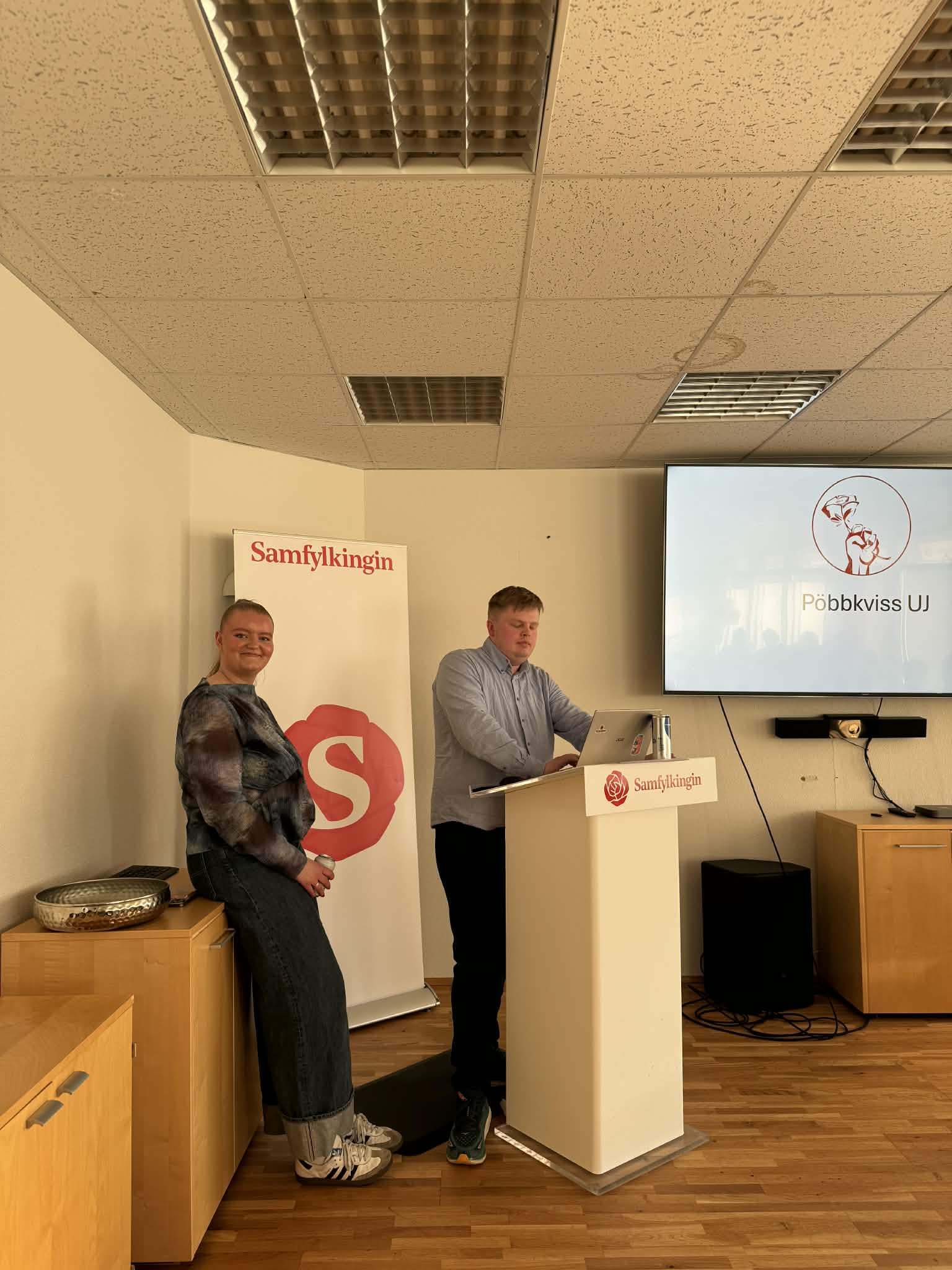
A question that has become symbolic of Iceland’s modernization is the issue of building a railway system.
Will a railway between the airport and Reykjavík ever be built?
Lilja Hrönn laughs.
– “I want that railway so much.”
Transport between Keflavík and the capital is a constant frustration. Buses run too infrequently; cars are necessary.
– “Everyone can relate to the need for better infrastructure, even across party lines.”
It is a reminder that politics sometimes boils down to the most concrete things: how to get from point A to point B.
Part III
Student politics and cost of living crisis
Student politics in Iceland is not a hobby activity. It is a training ground for future politicians — a parallel political system where organizers are shaped before entering national politics.
Lilja Hrönn describes it as almost a two-party system.
– “Right now there are essentially two movements. Röskva, which you could describe as social democratic or socialist left, and Vaka, which has historically been more right-wing.”
The two have dominated student politics since 1988. Other movements have come and gone, but none have survived as long.
Every year elections are held for the student council. Campaigns are intense. Boards meet monthly. Social activities mix with strategy.
– “Annual elections create incredibly strong organizers. No one gets paid. Youth activists in Iceland are used to working for free and mobilizing every year.”
The University of Iceland has around 13–14,000 students. Roughly half vote.
– “It’s an enormous campaign apparatus.”
For many, student politics is the first step into public life.
– “Most people in youth politics started in the student movements.”
Lilja herself was recruited to Röskva on her second day at university.
– “Those were my first real elections.”
The issues dominating student debate are rarely abstract. They concern everyday logistics.
– “Right now parking fees at the university are a big issue.”
It sounds trivial, but it connects directly to Reykjavík’s weak public transport system. The city is spread out. Buses are not sufficient for a car-free life.
– “The infrastructure isn’t built for living without a car.”
Housing is a larger issue. Only 10–15 percent of students live in student housing. The rest rent privately.
– “Student loans are expensive. Many avoid them entirely.”
Before 2019 full repayment was required. Now there is a 30 percent discount if you graduate on time. But fear of debt remains. The result is that working during studies is the norm.
– “70–80 percent of students work while studying.”
Icelandic students are older than elsewhere in the Nordic region. One third have children.
– “Working during studies is the norm, not the exception.”
It is a system built on endurance rather than security.
Across Europe the cost-of-living crisis has shaped student life — does it apply to Iceland as well?
– “Yes. Absolutely. Housing is the biggest crisis.”
Iceland is expensive. The currency is unstable. The krona is not pegged to the euro, which makes prices volatile. Today 10 Icelandic kronur correspond to about 0.73 SEK.
During the pandemic the housing market exploded. The Icelandic system is built around ownership. The rental market is private and rents have surged.
– “Even friends with master’s degrees and good jobs are still renting.”
Unemployment is low compared to Europe, but rising. A major airline bankruptcy led to layoffs. Students cannot receive unemployment benefits.
– “You’d think working during studies gives security later. But it doesn’t.”
Despite working, many struggle financially.
– “Students work a lot and still have a hard time.”
A simple student apartment costs around 130,000 Icelandic kronur per month (about 9,470 SEK). Housing support exists, but a large portion of student loans goes directly to rent.
The system sets limits on how much you are allowed to work before loans are reduced. At the same time, living costs force students to work more.
It is an economic paradox.
When she talks about future reforms, she looks toward the Nordic region.
– “We look at Norway and Sweden as models. Denmark is the long-term ideal.”
Part IV
Lilja Hrönn and the future
As the conversation moves away from structures and numbers toward the person behind the titles, the tempo slows. Lilja Hrönn speaks quickly, with the energy of someone who grew up inside a movement.
She started early.
– “I began youth activism when I was twelve through the Children’s Ombudsman’s council.”
Her upbringing was split between Iceland and Denmark. International perspectives came early, as did human rights engagement through Amnesty. Politics was never a sudden turn — more a gradual deepening.
In 2019 she began studying law at the University of Iceland. Almost immediately she was pulled into student politics.
– “On my second day I was recruited.”
The pandemic created space. When the world paused, she threw herself into organizing. In 2021 she became campaign manager for the student election.
The result was historic.
– “We won 16 out of 17 seats. The biggest victory in the student council’s history.”
That was when politics became more than an activity.
– “It was the first time I felt truly political.” She adds: “The university made me political.”
That same year she joined the Social Democratic youth organization. The year after she became vice chair. In 2023 she became chair. Today she serves as international secretary, sits on the party’s executive body, and is secretary of Iceland’s national youth council.
She laughs.
– “I usually joke that I sit on too many boards.”
What is the next step for you?
The next step is graduation. She expects to finish her law master’s degree in February.
– “It’s going to be hard not being a student anymore.”
University gave her more than education. It gave her politics, networks, direction.
– “I have to learn how to be an adult with a normal nine-to-five job.”
She doesn’t have a strict career plan. Her ambition is not linear.
– “I hope that one day I get to serve as a substitute member of parliament. I haven’t yet, but I’d like to try.”
What attracts her most is not the title but the movement.
– “I want to continue working internationally and within the youth movement and the party.”
As the new international secretary she wants to strengthen Nordic cooperation: election strategies, campaign methods, organizational learning.
– “We can learn more from each other.”
Where do you see the movement in five to ten years?
When she speaks about the future of the youth movement, the goal is clear.
– “I want us to become the largest political youth movement in Iceland.”
Today they are the third largest. Reykjavík dominates.
– “We can’t be a capital-city movement.”
She wants to see young social democrats in municipal councils across the country — not because they are young, but because young perspectives are missing. Preparations for the local elections in March are already in full swing.
Iceland is geographically remote but politically in the middle of the Nordic region. Lilja describes Nordic cooperation as unusually equal.
– “I don’t feel looked down on even though Iceland is smaller and has fewer resources.”
Understanding requires active dialogue.
– “Listening both ways. Holding meetings in Iceland. Trying to understand each other’s systems.”
She sees the Nordic social model as a shared inheritance that requires maintenance.
– “If we want to preserve it, we have to cooperate. Whether Iceland joins the EU or not, Nordic cooperation is crucial.”
Youth platforms and international organizations are tools for influence.
– “If we didn’t talk, you wouldn’t know about Iceland’s cost-of-living crisis. That’s why conversations matter.”
Before we finish, she sends a message to students in the movement.
– “Congratulations on being part of the student movement.”
For her, it was the decisive experience.
“Joining the student movement gave me more than anything else in my life.”
The advice is simple.
– “Say yes.”
Opportunities are stressful. Running for office is frightening. She herself was terrified when she ran for chair.
– “But it gave me so much.”
Then comes the encouragement:
– “You’re young. These are the most fun years of your life. The movement makes them better.”
A short pause.
– “Don’t quit.”

Member discussion: